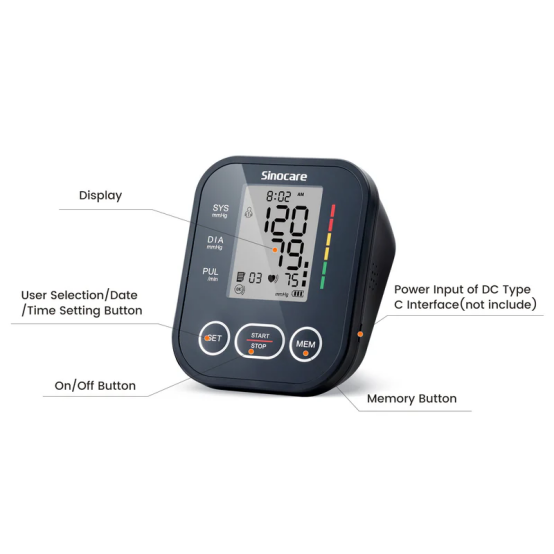
A blood pressure monitor measures the pressure exerted by blood against the walls of the arteries as the heart pumps and relaxes. Modern home devices typically use the oscillometric method, which detects pressure changes in the cuff during inflation and deflation. The monitor then calculates two values: systolic pressure, which occurs when the heart contracts, and diastolic pressure, which occurs when the heart relaxes between beats. This process allows users to check their blood pressure quickly without visiting a healthcare facility.
The Role of the Cuff During Measurement
The cuff is one of the most important components of an upper arm blood pressure monitor. When wrapped around the upper arm and inflated, it temporarily restricts blood flow through the artery. As the cuff gradually releases pressure, sensors inside the device detect tiny oscillations caused by blood moving through the vessel. The monitor analyzes these signals and converts them into blood pressure readings displayed on the screen. Proper cuff placement and posture are essential for obtaining accurate results.
Technology Makes Home Monitoring Easier
Advances in digital technology have made blood pressure monitoring more convenient than ever. The Sinocare arm blood pressure monitor is designed for home use and features fully automatic measurement, allowing users to obtain readings with minimal effort. Its digital display presents measurement results clearly, making it easier to review systolic pressure, diastolic pressure, and pulse rate. By simplifying the testing process, a blood pressure monitor can encourage more consistent monitoring habits.
Why Understanding the Process Matters
Knowing how an upper arm blood pressure monitor functions helps users appreciate the importance of proper measurement techniques. Accurate readings depend on factors such as cuff positioning, body posture, and remaining still during the test. Sinocare develops health-monitoring devices that support routine blood pressure management, helping users keep track of changes over time. When combined with regular monitoring and healthy lifestyle choices, a reliable blood pressure monitor can provide valuable information for long-term cardiovascular health management.
