Modern power grids are undergoing structural change. High penetration of wind and solar generation is reducing system inertia while increasing volatility on both supply and demand sides. At the same time, electrification of transport and industry is creating sharper demand peaks. These combined factors make real-time grid balancing more complex than in traditional centralized power systems.
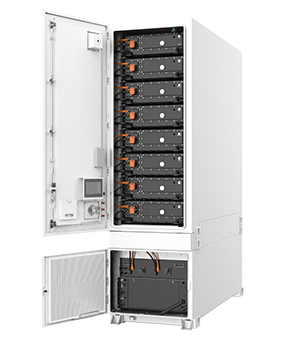
In this context, Utility-Scale Liquid-Cooled Containerized BESS has become a core infrastructure asset rather than a supplementary technology. It enables grid operators and energy developers to actively manage frequency stability and load curves with high responsiveness and predictable performance.
Grid Stability Challenges in Modern Power Systems
Electric power systems must maintain a constant frequency, typically 50Hz or 60Hz depending on the region. Even small deviations indicate imbalance between generation and consumption. Historically, large synchronous generators provided natural inertia that helped stabilize frequency fluctuations.
However, inverter-based renewable energy sources do not inherently provide the same inertial response. This leads to faster frequency deviation during disturbances and requires faster corrective action.
At the same time, peak demand periods are becoming more pronounced due to industrial clustering and electrified infrastructure such as EV charging networks. Without intervention, these peaks force utilities to activate expensive peaker plants or invest in additional transmission capacity.
To address these challenges, modern systems rely on fast-responding distributed energy resources, especially battery energy storage.
Frequency Regulation Through Fast Response Energy Systems
Frequency regulation is the continuous process of correcting minor deviations in grid frequency by balancing active power injection and absorption. It is typically coordinated through Automatic Generation Control (AGC) signals sent from grid operators to participating resources.
Battery energy storage systems are particularly suitable for this role due to their near-instant response time. They can switch between charging and discharging modes within milliseconds, which is significantly faster than conventional thermal or hydro generation units.
In this operational model, utility scale battery energy storage systems respond dynamically to AGC signals. When frequency drops below the target threshold, the system discharges energy to support the grid. When frequency rises above the target, it absorbs excess electricity. This bidirectional capability helps maintain system stability within a narrow operational band.
From a control perspective, battery management systems continuously monitor state of charge, temperature, and power output to ensure accurate response and long-term operational safety. This makes them suitable not only for primary frequency response but also for secondary and tertiary regulation markets.
Peak Shaving and Demand Load Optimization
Peak shaving refers to the reduction of electricity consumption during periods of high demand. Instead of relying on additional generation assets, stored energy is discharged during peak hours to flatten the load curve.
This function is especially important in commercial and utility-scale applications where demand charges or capacity tariffs represent a significant portion of operational costs. By reducing peak load, system operators can defer infrastructure upgrades and improve overall asset utilization.
Battery storage systems typically charge during off-peak hours when electricity prices are lower or renewable generation is abundant. The stored energy is then dispatched during peak demand windows, effectively shifting load in time without affecting end-user consumption patterns.
This temporal energy arbitrage also contributes to grid efficiency by reducing congestion in transmission and distribution networks. Over time, it improves asset longevity and reduces stress on upstream generation resources.
Utility-Scale Liquid-Cooled Containerized BESS in Grid Applications
The role of advanced system architecture becomes critical when scaling these applications to utility level. The Utility-Scale Liquid-Cooled Containerized BESS is designed to support high-capacity, long-duration operation with optimized thermal management.
Liquid cooling technology ensures uniform temperature distribution across battery cells, which improves cycle life and enhances performance stability under continuous charge-discharge operations. This is particularly important in frequency regulation scenarios where rapid cycling is required throughout the day.
Containerized architecture also simplifies deployment. Systems are pre-integrated, tested, and delivered as modular units that can be rapidly installed on-site. This reduces engineering complexity and shortens commissioning timelines for large projects.
From an OEM and ODM perspective, Dyness provides scalable energy storage solutions tailored for utility developers, EPC contractors, and industrial energy operators. These solutions are designed to integrate into existing grid infrastructure while supporting customized capacity expansion and project-specific configuration requirements.
In practical deployment, containerized systems can be combined in parallel to achieve multi-megawatt or even gigawatt-scale installations. This modular scalability is essential for regions experiencing rapid renewable energy expansion and increasing grid flexibility requirements.
Operational Value for Utilities and Energy Developers
Beyond technical performance, utility-scale storage systems create measurable economic value. Frequency regulation services can generate stable ancillary revenue streams, while peak shaving reduces operational expenditure and delays capital investment in grid expansion.
For developers, the ability to deploy standardized containerized units reduces project risk and improves financial predictability. For grid operators, it enhances system reliability without requiring major structural upgrades to existing infrastructure.
As energy markets continue to evolve, storage systems are increasingly being integrated into multi-service platforms that combine frequency control, peak management, reserve capacity, and renewable smoothing within a single asset.
Conclusion
Utility-scale energy storage is becoming a foundational component of modern grid architecture. Through fast frequency response and intelligent peak shaving strategies, battery systems help stabilize increasingly complex power networks.
With technologies such as the Utility-Scale Liquid-Cooled Containerized BESS, large-scale deployments can achieve higher efficiency, improved thermal performance, and scalable integration. As a result, energy storage is no longer a supporting technology but a core enabler of next-generation power systems.
