Modern factories must produce consistent joints while managing rising output demands, tighter tolerances, and pressure to reduce rework. Robotic resistance welding combines controlled electrical energy with programmable movement, helping manufacturers repeat welding operations across large production batches.
Its value extends beyond speed: properly integrated systems can improve weld consistency, reduce repetitive manual tasks, and make process data easier to track. The results depend on suitable tooling, validated parameters, and the specific requirements of each component.
Improving Repeatability and Production Efficiency
Manual welding can be affected by differences in operator technique, part positioning, and working conditions. A robotic system follows programmed paths and coordinates with welding controls, reducing variation caused by repeated manual movements. This approach is particularly useful for assemblies with many similar joints or demanding production schedules.
Repeatability, however, depends on more than the robot itself. Fixtures must hold components in the correct position, and electrodes need reliable access to the joint. Small gaps, surface contamination, or misaligned parts can affect current flow and weld formation even when the robot follows its programmed path accurately.
The benefits of automation are most apparent when the process is stable enough to support consistent cycles. Manufacturers should assess cycle time, joint quality, equipment availability, and rework rates together. Such measurements reveal whether robotic resistance welding improves the overall production process rather than simply increasing the number of welds made per hour.
Understanding Process Requirements and Weld Quality
Resistance welding generates heat by passing electrical current through contacting materials while applying pressure. In spot welding, the heat forms a localized bond between overlapping metal sheets. Weld quality depends on variables such as current, weld duration, electrode force, material thickness, and surface condition, all of which must be matched to the application.
Because welding conditions may change during automated production, adaptive resistance welding control can help compatible robotic welding systems respond to certain process variations rather than relying entirely on fixed welding parameters.
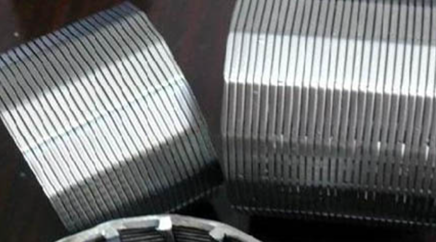
Different products require different process settings. Automotive sheet-metal assemblies may need numerous repeatable spot welds, while stainless steel filter tubes require attention to seam geometry, joint alignment, and the desired integrity of the finished tube. These differences demonstrate why resistance welding applications should be assessed according to the component’s function instead of relying on a universal parameter recipe.
Monitoring can help detect process changes before defective parts accumulate. Current and voltage signals, electrode condition, and periodic weld testing provide complementary information about performance. Visual inspection remains useful, but it cannot independently confirm every internal characteristic of a weld; appropriate mechanical or other validation tests may also be necessary.
Integrating Robots With Welding Equipment
Successful automation requires coordination between the robot, welding controller, power supply, fixtures, and production-line controls. The robot determines the electrode’s position and movement, while the welding equipment controls the electrical cycle and associated process settings. Communication between these elements helps synchronize part handling and welding operations.
Production engineers should also consider the work envelope, payload, cable routing, electrode replacement access, and safety guarding. A robot that reaches every weld point in a simulation may still encounter physical interference from fixtures or nearby equipment. Offline programming and trials using representative parts can expose these issues before commissioning.
Automation can support resistance welding applications in automotive structures, metal enclosures, filtration equipment, and other manufactured assemblies. Yet not every workstation needs a fully robotic arrangement. Manual, semi-automatic, or dedicated machine configurations may be more practical for low-volume products, frequent design changes, or components that are difficult to fixture consistently.
Assessing Equipment and Long-Term Operating Needs
Before investing in a system, manufacturers should define the production problem that automation is expected to solve. Relevant measures include required output, acceptable defect rates, part variation, changeover frequency, available floor space, and operator involvement. These criteria help teams compare equipment configurations using production needs rather than headline specifications alone.
Maintenance and technical support deserve equal attention. Electrodes wear with use, cooling systems need inspection, and electrical connections can deteriorate over time. A documented maintenance schedule, accessible replacement parts, and clear troubleshooting procedures help limit unplanned stoppages. Staff training should cover both normal operation and the correct response to abnormal weld results.
In automotive body-in-white manufacturing, Sunke provides resistance welding control solutions for robotic welding guns. These applications demonstrate how suitable welding controllers can support coordinated operation between welding equipment, robot systems, and production-line controls.
Conclusion
Automation delivers lasting value when movement accuracy, electrical control, part positioning, and quality verification work as one coordinated process. Robotic resistance welding can help factories manage repetitive joining tasks, but the best configuration depends on component design, production volume, and maintenance capability. By validating resistance welding applications against real workpieces and measurable acceptance criteria, engineers and purchasing teams can make a more informed decision about where robotic equipment will provide practical manufacturing benefits.
