Digital manufacturing is becoming an essential part of modern dental workflows. As 3D printing technology continues to develop, both dental clinics and laboratories are adopting additive manufacturing to improve efficiency, customization, and production flexibility.
However, choosing the right printing solution requires understanding the differences between a chairside workflow and a laboratory production environment. A chairside 3D printer is designed to support in-office manufacturing and faster treatment workflows, while a 3D printer for dental lab applications usually focuses on higher production capacity and handling a wider range of cases.
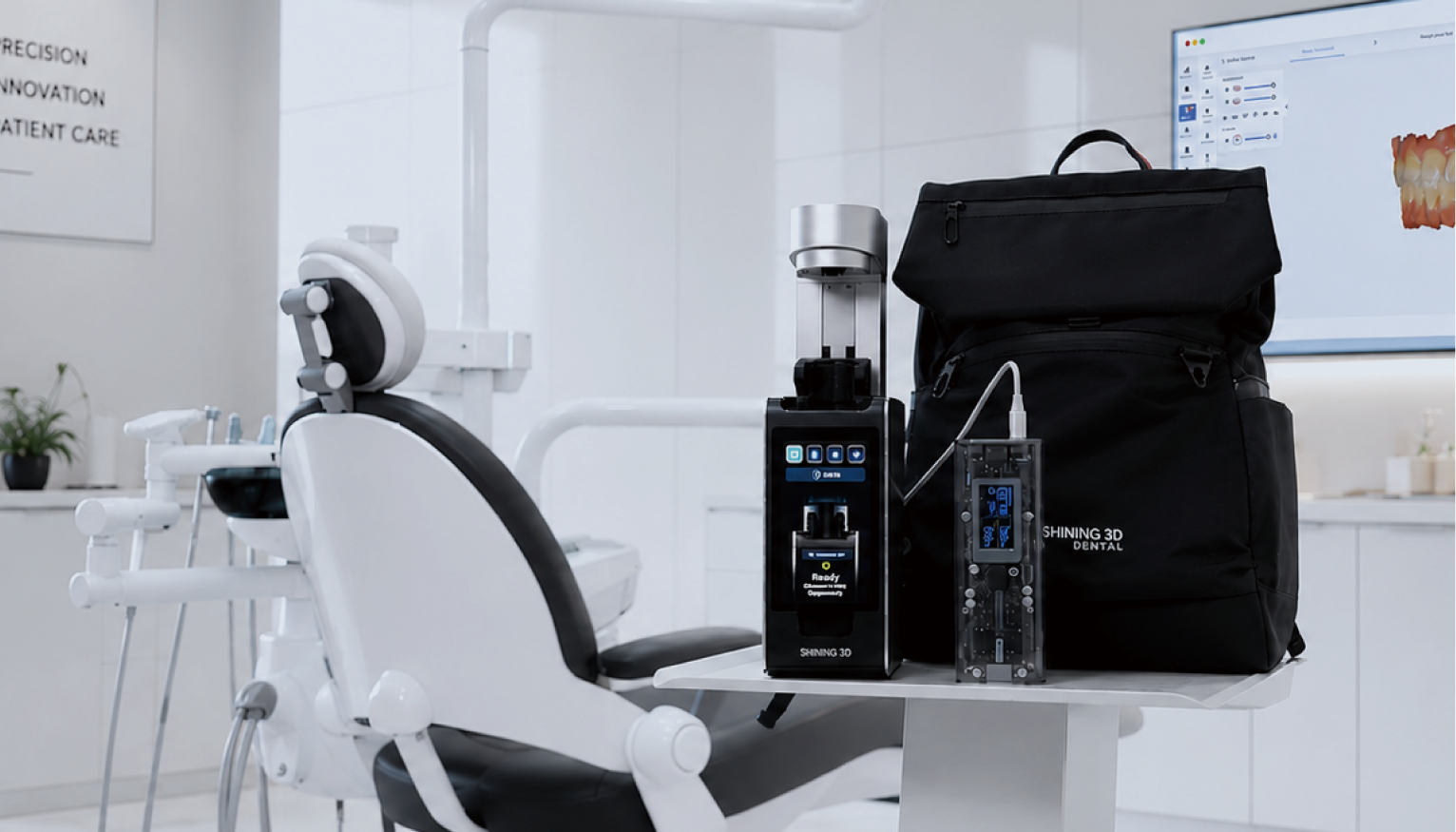
For dental professionals evaluating a dental resin 3D printer, the right choice depends on clinical needs, production volume, available space, and workflow goals. SHINING 3D Dental provides digital manufacturing solutions, including the Ceramix-Nano system, which supports chairside ceramic restoration workflows through integrated printing and curing technology.
Understanding Chairside 3D Printers
A chairside 3D printer is designed to be placed within a dental clinic and used directly during patient treatment workflows. Instead of sending digital files to an external laboratory, dentists can complete selected manufacturing steps in-house.
The typical chairside workflow includes:
- Digital patient scanning
- Restoration design3D printing
- Post-processing
- Clinical fitting and evaluation
This approach helps reduce communication delays and allows dental teams to manage more procedures during a single visit.
A chairside 3D printer is especially useful for clinics focusing on restorative dentistry, same-day treatment workflows, and improved patient experience.
Advantages of Chairside Printing
The main benefit of chairside manufacturing is workflow efficiency. By producing suitable dental applications within the clinic, dentists can reduce dependence on external production services.
Key advantages include:
- Shorter treatment timelines
- Better control over production schedules
- Faster communication between design and clinical teams
- Improved patient convenience
For clinics that frequently handle restorative cases, a dental resin 3D printer designed for chairside use can become an important part of a digital workflow.
Understanding Dental Lab 3D Printers
A dental laboratory printer is designed for professional production environments where technicians manage a larger number of cases from multiple clinics.
A 3D printer for dental lab applications usually focuses on production efficiency, material flexibility, and the ability to handle different types of dental devices.
Laboratories may use 3D printers for producing:
- Dental models
- Surgical guides
- Dentures
- Splints
- Temporary restorations
- Orthodontic components
Because laboratories typically process many cases each day, production capacity and workflow management are often major considerations.
Advantages of Dental Lab Printing
Dental laboratories require equipment that can support diverse applications and larger workloads.
Benefits of laboratory-focused systems may include:
- Higher production capacity
- Support for multiple materials
- Batch manufacturing capability
- Flexible workflow customization
For laboratories serving multiple dental practices, a dedicated 3D printer for dental lab use can help improve production efficiency and expand service capabilities.
Key Differences Between Chairside and Dental Lab Printers
- Workflow Location and Purpose
The biggest difference between the two approaches is where manufacturing takes place.
A chairside system is integrated into the dental clinic. The goal is to provide faster production and support direct patient treatment workflows.
A laboratory system is designed for centralized production. The goal is to manufacture a larger number of dental products efficiently.
Clinics should consider whether they need immediate access to printed restorations or whether centralized laboratory production better matches their business model.
- Production Volume
Production requirements are another important factor.
A dental clinic may only need to produce selected restorations and models throughout the day. In this situation, a compact chairside 3D printer may provide sufficient capacity.
A laboratory often handles many cases from different customers. Therefore, a 3D printer for dental lab applications may require greater throughput and flexibility. The ideal system depends on the number of cases, types of products, and expected growth.
- Space Requirements
Space availability can influence equipment selection. Dental clinics often have limited space because the primary environment is designed for patient treatment. Compact printing solutions can make it easier to introduce digital manufacturing without requiring a dedicated production room.
Dental laboratories generally have more specialized workspace for printing, cleaning, curing, and storage. When selecting a dental resin 3D printer, professionals should evaluate not only the printer size but also the complete workflow space required for materials and post-processing.
- Material and Application Needs
Different users may prioritize different material capabilities. A clinic may focus on restorative applications that can improve patient treatment efficiency. A laboratory may need broader material options to support different customer requirements.
For example, SHINING 3D Dental’s Ceramix-Nano is designed for chairside ceramic restoration workflows. The system uses LumiCera ceramic resin capsules and supports applications including crowns, bridges, veneers, inlays, and onlays. This type of solution is aimed at clinics seeking a streamlined approach to producing permanent restorations closer to the patient.
How to Choose the Right Solution for Your Workflow?
A chairside 3D printer may be a suitable choice for dental clinics that:
- Want to reduce external laboratory dependence
- Perform frequent restorative procedures
- Need faster treatment workflows
- Prefer direct control over production timing
For these clinics, bringing manufacturing closer to the treatment room can improve operational efficiency.
Choose a Dental Lab Printer If You Need Production Flexibility
A 3D printer for dental lab applications may be more suitable for laboratories that:
- Process many cases daily
- Serve multiple dental clinics
- Require different material options
- Need scalable production workflows
Laboratories often prioritize productivity and versatility because they manage a wider range of dental applications. Some dental organizations may benefit from combining chairside and laboratory workflows.
For example, a clinic may use a chairside system for urgent restorative cases while working with a laboratory for complex productions. This creates a flexible approach where each workflow handles the applications it performs best. Digital connectivity between clinics and laboratories can further improve communication and case management.
SHINING 3D Dental Ceramix-Nano for Chairside Restoration Workflows
SHINING 3D Dental develops digital dentistry solutions that connect scanning, design, and manufacturing processes. The Ceramix-Nano solution focuses on chairside ceramic restoration production by integrating printing and curing functions into a compact workflow.
The system uses Adaptive Pneumatic Stereolithography technology and is designed to support permanent ceramic restoration applications. According to SHINING 3D Dental, Ceramix-Nano can produce restorations such as crowns, bridges, veneers, inlays, and onlays through a digital chairside workflow.
For clinics evaluating a dental resin 3D printer, an integrated chairside solution can help simplify digital manufacturing while improving treatment efficiency.
Factors to Evaluate Before Purchasing a Dental Printer
- Workflow Compatibility
The printer should fit naturally into existing scanning and design processes. A disconnected workflow can reduce the benefits of digital manufacturing.
- Ease of Operation
Clinics may prioritize systems that require less technical management, while laboratories may prefer more customization options.
- Application Range
Professionals should consider current needs and future expansion opportunities. A printer that supports multiple applications may provide greater long-term value.
- Total Workflow Cost
The investment includes more than the printer itself. Materials, software, training, maintenance, and staff time should also be considered.
Conclusion
Choosing between a chairside 3D printer and a 3D printer for dental lab depends on the goals and workflow requirements of each dental professional. Clinics often prioritize speed, convenience, and in-office production, while laboratories focus on capacity, flexibility, and centralized manufacturing.
For professionals considering a dental resin 3D printer, understanding the differences between chairside and laboratory workflows helps create a more effective digital dentistry strategy.
With solutions such as SHINING 3D DENTAL‘s Ceramix-Nano, dental clinics can explore integrated chairside manufacturing workflows designed to support modern restorative dentistry and more efficient patient care.
