Financing large energy infrastructure projects has become more complex as grids transition toward flexibility and renewable integration. In this context, utility-scale battery storage projects are increasingly structured to deliver both financial returns and grid services. WHES supports this shift by providing solutions tailored for large deployments, where a large-scale battery energy storage system must align with long-term investment models, regulatory frameworks, and operational performance requirements.
Financing Models Behind Utility-Scale Battery Storage
Developers typically structure utility-scale battery storage projects through a mix of equity investment, debt financing, and long-term revenue contracts. These may include power purchase agreements (PPAs), capacity payments, or grid service revenues such as frequency regulation. A large- scale battery energy storage system project often relies on stacking these revenue streams to ensure stable cash flow. WHES systems are designed to support such models by enabling participation in multiple grid services, including peak shifting, frequency response, and renewable smoothing.
System Design and Performance Considerations
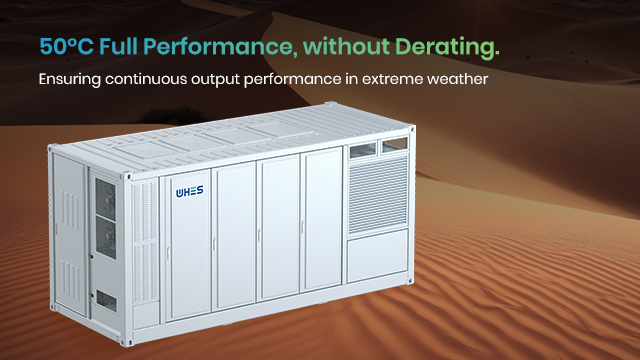
Beyond financing, project structure depends heavily on system performance and scalability. For example, WHES offers the PA-3.0EU utility system, delivering 744–1488 kW power and 1490–2980 kWh capacity, designed specifically for utility-scale battery storage applications. Its modular architecture supports flexible capacity expansion and cluster management, which helps reduce operational risk in large-scale battery energy storage systems deployments. Additional features such as integrated AC/DC design, high efficiency conversion, and stable operation even at 50°C without derating further enhance project reliability and long-term returns.
Aligning Project Structure with Grid and Market Needs
A successful large-scale battery energy storage systems project must align technical capabilities with market requirements. Grid operators increasingly require fast response times, high availability, and compatibility with renewable energy sources. WHES addresses these needs through integrated energy management and system-level optimization, allowing utility-scale battery storage assets to respond dynamically to grid signals and maximize revenue opportunities. This alignment between system design and market demand is essential for both project bankability and operational success.
From Infrastructure Investment to Long-Term Asset Value
As the energy landscape evolves, utility-scale battery storage is becoming a core infrastructure asset rather than a supplementary technology. Investors now evaluate large-scale battery energy storage systems based on lifecycle value, including efficiency, maintenance costs, and adaptability to future grid requirements. WHES contributes to this transition by delivering scalable and reliable solutions that support long-term project performance, helping stakeholders turn complex storage deployments into stable, revenue-generating assets.
